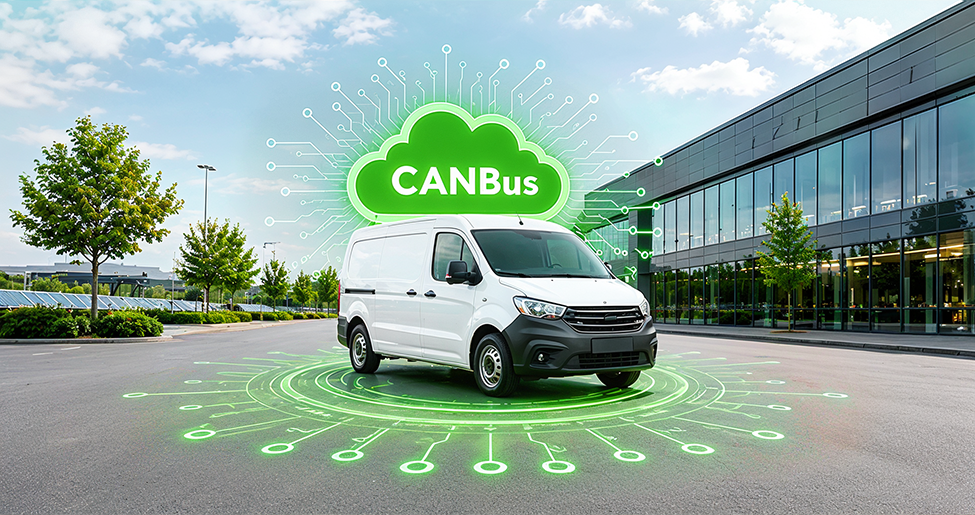
CANBus (Controller Area Network) is a communication protocol that enables all electronic control units (ECUs) within a vehicle to communicate with each other over a single data line, eliminating cable clutter. With the digitalization of vehicle technologies, data-driven management has become a necessity for businesses looking to increase operational efficiency and optimize fleet costs.
CANBus, a powerful communication protocol found in modern vehicles that enables all electronic control units to communicate without a mess of cables, offers fleet managers critical data directly from the source, such as fuel consumption, engine temperature, real-time speed, and driver behavior, when integrated with vehicle tracking systems.
What is CANBus (Controller Area Network)?
CANBus is a data communication standard developed by Bosch in the 1980s to reduce wiring complexity in the automotive industry and to enable safe and fast communication between in-vehicle electronic components.
In traditional systems, separate cables must be run between each sensor and control unit. However, in the CAN bus architecture, all units communicate over a single data line (bus). All electronic components within the vehicle, such as the Engine Control Unit (ECU), braking system (ABS), airbags, and instrument cluster, are part of this network. This structure regulates the data traffic within the vehicle, allowing each unit to instantly access data generated by other units.
How does CANbus work?
The operating principle of a CAN bus system is similar to a broadcast network. No unit on the network directly sends data to a specific receiver. Instead, the relevant component places the data it produces onto the shared data line so that the entire network can hear it.
- Data Packaging and Identifiers Each data packet contains a unique identifier (ID) that indicates which component the data belongs to and its priority status.
- Message Filtering All other control units on the network constantly listen to these messages passing through the line. Each unit filters and receives the data that is useful to it, and ignores messages that do not concern it.
- Priority Management If multiple units try to send data simultaneously, the priority value in the message ID is considered. For example, critical safety data from the anti-lock braking system (ABS) is always prioritized over comfort data from the climate control system, and will use the bus first.
What is the difference between CANBus and OBD-II?
In vehicle data systems, the concepts of CAN bus and OBD-II are often confused, but they actually refer to different layers and purposes. The fundamental differences between these two systems are as follows:
| Feature | CANBus (Controller Area Network) | OBD-II (On-Board Diagnostics) |
| Main Purpose | To ensure instantaneous communication between all electronic control units (ECUs) within a vehicle. | Diagnose vehicle engine, emissions, and other subsystem faults, and access service data. |
| Scope | It is the vehicle's continuously operating internal communication network; it carries all live data such as speed, RPM, fuel, and temperature. | It is an interface that typically presents standard diagnostic trouble codes (DTCs) and emissions data to the outside world. |
| Structural Position | This is a hardware and software communication protocol that forms the backbone of the vehicle. | It is a physical connection port that provides external access to the vehicle's internal network (mostly the CAN bus line). |
How to Integrate CANBus Data with Vehicle Tracking Systems
To make the raw data flowing from the CANBus system meaningful in fleet management, it needs to be integrated with vehicle tracking systems. This integration process occurs through the following steps:
- Hardware Connection The vehicle tracking device is physically connected to the vehicle's CANBus line (CAN-High and CAN-Low wires) either directly or through contactless readers (CAN-Click).
- Data Reading and Filtering: The tracking device filters critical parameters for fleet management (fuel, RPM, mileage, etc.) from thousands of data packets flowing over the network.
- Comprehension and Transmission: The device processes this filtered raw data according to manufacturer protocols and turns it into meaningful metrics. Then, it securely transmits it to servers via the GSM/GPRS or 4G network.
- Software Interface The data reaching the server is processed by fleet tracking software and converted into user-friendly graphics, reports, and instant alerts.
What data is obtained with CANBus in Vehicle Tracking Systems?
CANBus integration allows access to technical and operational data at a depth that standard GPS-based tracking systems cannot provide. With Mobiliz CANBus solutions, the following data are collected in real-time from the vehicle:
- Actual Fuel Consumption: Fuel level in the tank, total fuel consumed, instantaneous consumption, fuel consumed at idle, and remaining range.
- Motor Parameters: Engine speed (RPM), engine coolant temperature (overheating), oil temperature, and total operating hours.
- Kilometer and Speed Information: Actual total mileage and instantaneous speed data obtained from the vehicle's trip computer and instrument panel.
- Pedal and Driving Conditions: Accelerator pedal depression rate, brake and clutch pedal usage status, and reverse gear information.
- Dashboard and Hardware Information: Seat belt, parking brake, parking lights, low/high beams, front/rear fog lights, hazard lights, and cruise control status.
Mobiliz CANBus Solutions: Why Us?
Mobiliz processes CANBus data from your vehicles with the highest accuracy through its advanced telematics solutions. With our deep industry experience and technological infrastructure, we transform complex vehicle data into concrete action plans that will increase your business's profitability.
- Broad Compatibility (800+ Vehicles): Whether you are a small business operating with light commercial vehicles or manage a large fleet of heavy commercial vehicles, our system is fully compatible with over 800 vehicle makes and models.
- CAN-Click Technology Thanks to the contactless reader (CAN-Click) feature included in our CANBus Packet DT43C and DT435C solutions, installation is done without cutting or stripping the original vehicle wiring. This ensures that your vehicle's manufacturer warranty remains intact and eliminates electrical risks completely.
- Advanced Sensor and Indicator Support: It provides end-to-end control over your fleet by analyzing and reporting more than 35 different sensor and indicator data simultaneously.
- Built-in Battery Assurance Our devices have an internal battery. In case of a possible intervention or even if the device is disassembled, it continues to send information, offering uninterrupted analysis and security.
What is the return on investment for businesses from CANBus integration?
Implementing CANBus integration in a fleet provides measurable savings in direct cost items. Industry analyses and user data reveal the system's return on investment (ROI) as follows:
- Reduction in Fuel Costs: Gereksiz rölanti sürelerinin, yüksek devirli araç kullanımının ve hız ihlallerinin engellenmesiyle yakıt tüketiminde %10 ile %15 arasında doğrudan tasarruf elde edilir.
- Decrease in Maintenance and Repair Expenses: Motor sıcaklığı, yağ basıncı ve arıza kodlarının anlık takibiyle olası büyük hasarlar erkenden önlenir. Aşınmaya bağlı parça değişim maliyetleri %20’ye varan oranlarda azalır.
- Extended Tire Life: Sert fren ve ani hızlanma gibi agresif sürüş alışkanlıklarının törpülenmesi, lastik kullanım ömrünü %15 oranında artırır.
- Depreciation Period: The payback period for the investment is short, averaging 3 to 6 months, depending on fleet size and usage intensity.
What are the advantages of using CANBus in fleet management?
The transparency offered by CANBus data provides fleet managers with strategic advantages in operational processes:
- Precise Fuel Management: Depo şamandırasındaki dalgalanmalardan etkilenmeyen, doğrudan motorun püskürttüğü yakıtı ve depo seviyesini ölçen %99 doğrulukta yakıt raporlaması sağlanır. Yakıt hırsızlıkları ve suistimaller anında tespit edilir.
- Proactive Maintenance Planning Vehicle service times or part replacement intervals are planned accurately based on actual mileage and engine hour data from the vehicle, not on estimated durations.
- Driver Behavior Analysis (DRIVING METER): With our DRIVINGMETER solution, fair scorecards are created by analyzing not only whether drivers exceed the speed limit, but also the RPM range in which they operate the vehicle, sudden accelerations, the frequency of hard braking, and how long they keep the vehicle within the economical RPM range, the “green band.”.
- Operational Transparency and Smart Route Tracking: Thanks to route integration, deviations from planned routes, prolonged stops, and aggressive driving are monitored in real-time, continuously improving operational processes.