What is Fleet Management? How Does It Work?
Fleet management is the process of planning, monitoring, and improving a business’s fleet of vehicles, drivers, and the maintenance, fuel, paperwork, and reporting processes related to these vehicles. Vehicle tracking is part of fleet management. In addition to this, fleet management also covers driver, maintenance, fuel, cost, and regulatory processes. Fleet performance is monitored using KPIs such as fuel consumption, vehicle utilization rate, maintenance status, and driving behavior. When selecting a fleet management system, the number of vehicles, CANBus, API, and ERP integration, reporting, and support scope should be considered together.
What is a Fleet?
A fleet is the complete set of vehicles a business or organization uses, owns, or leases for its operations. Passenger cars, light commercial vehicles, trucks and trailers, service vehicles, and construction equipment can all be part of a fleet. A fleet can be of different sizes, ranging from a few vehicles to thousands of vehicles.
What is Fleet Management?
Fleet management is the process of planning, monitoring, and improving a business’s fleet of vehicles, drivers, and the operational processes associated with them. Fleet management includes vehicle tracking, driver management, maintenance, fuel, paperwork, and regulatory compliance, as well as reporting. The goal is to ensure that vehicles are used safely, efficiently, and with controllable costs.
In corporate fleet management, these processes are usually handled by a fleet manager or a team using a digital system. Filo management system This way, vehicle, driver, and cost data are collected in one place.
What are the differences between fleet management and vehicle tracking?
Vehicle tracking shows where the vehicle is and how it is moving. Fleet management, in turn, combines this data with maintenance, fuel, driver, and cost data to support decision-making.
|
Criteria |
Vehicle tracking |
Fleet management |
|
Focus |
Vehicle location, speed, and route |
The vehicle, the driver, the costs, and the entire process |
|
Scope |
Instant and historical location data |
Maintenance, fuel, paperwork, reporting |
|
User |
Operations and shipment team |
Fleet manager, operations and finance teams |
|
It came out |
Map, route history, alarms |
KPI reports, maintenance plan, cost analysis |
How Fleet Management Works?
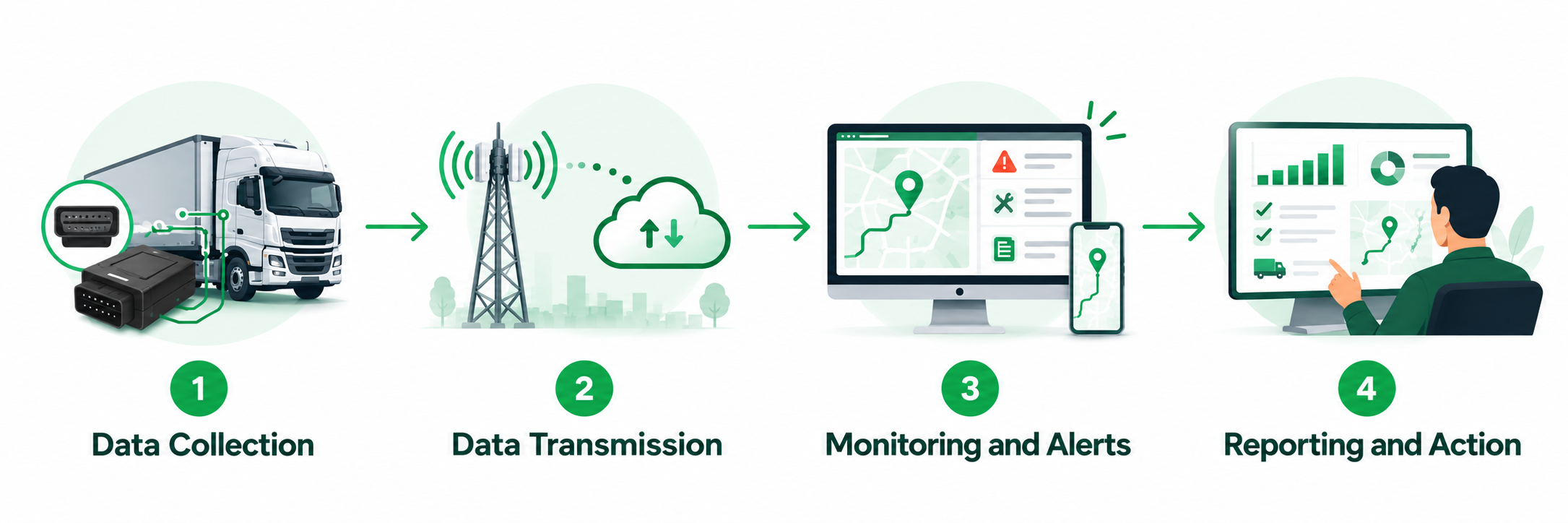
Fleet management works by converting the data collected from the vehicles into reports and actions on a single platform. The process usually consists of four steps:
- Data collection: The tracking device installed in the vehicle and CANBus The connection collects location, speed, engine, fuel, and driving data. Additional data can be added through temperature, door, or load sensors.
- Data transfer: The collected data is transferred to the fleet management platform via the mobile network.
- Monitoring and warnings: The platform tracks vehicle location, maintenance times, driving violations, and paperwork deadlines, and generates alerts when necessary.
- Reporting and action: According to reports, the fleet manager makes decisions regarding route, maintenance plan, driver training, and vehicle allocation.
What are the Basic Components of Fleet Management?
The basic components of fleet management are vehicle tracking, driver management, fuel management, maintenance tracking, vehicle life cycle management, document tracking and reporting. When these components are managed together, the fleet can be managed more systematically and based on data.
Vehicle Tracking and Location Visibility
Vehicle tracking systems, It displays the location, speed, and route history of the vehicles in the fleet. This visibility helps ensure that vehicles are allocated correctly to tasks and that any unplanned use is detected.
Driver Management and Driving Safety
Driver management covers driver assignments, document validity, and driving behavior. Monitoring data such as hard braking, sudden acceleration, and speeding supports the development of safe driving habits. In-vehicle cameras, By recording road and driver images, it helps in post-accident and incident investigations and providing concrete feedback to drivers. Mobileiz’s driver behavior analysis solution DriverMeter These data are points based on the driver.
Fuel Management
Fuel is one of the most prominent items in fleet costs. Monitoring fuel consumption, running times, and fuel purchases together makes it easier to spot unexpected high consumption. For details on this topic Optimize Fuel Consumption in Fleet Management You can read the article.
Maintenance and Vehicle Health Monitoring
Maintenance monitoring includes monitoring the periodic maintenance dates, mileage and engine hours, and fault codes. Timely maintenance helps reduce unplanned breakdowns and the time the vehicle is out of operation due to service.
Vehicle Life Cycle Management
The vehicle lifecycle encompasses the stages of purchasing or renting the vehicle, its use, renewal, and disposal. Monitoring the costs at each stage makes it easier to see the total cost of ownership of the vehicle and to plan the renewal time correctly.
Document Tracking and Reporting
The monitoring of historical records such as inspections, insurance, fines, and driver's licenses is an important part of fleet management. Reporting vehicle, driver, maintenance, fuel, accident, and penalty data enables the overall performance of the fleet to be evaluated.
What Does the Fleet Manager Do?
The fleet manager is responsible for the safe, efficient, and compliant use of vehicles. The main areas of responsibility are:
|
Area of responsibility |
Main responsibilities |
|
Vehicle supply and renewal |
Purchase or lease decision, vehicle selection, renewal plan, disposal |
|
Maintenance |
Periodic maintenance plan, service processes, failure tracking |
|
Driver management |
Driver's license and document checks, driving behavior monitoring, training |
|
Fuel and cost |
Fuel card management, consumption analysis, budget tracking |
|
Legislation and documents |
Inspections, insurance and car insurance renewal, penalty follow-up |
|
Route and operation |
Vehicle allocation, route planning, work orders |
|
Reporting |
KPI tracking and reporting to management |
Regulatory and Documentation Tracking in Fleet Management in Turkey
A document that has expired or a delayed inspection can lead to the vehicle being excluded from operations and administrative penalties. Therefore, the regular monitoring of historical records is an important part of fleet management.
|
The subject of follow-up |
Why it is important |
How to follow |
|
Periodic vehicle inspection |
Driving a vehicle with expired inspection period may be subject to a fine |
Inspection dates are kept in the system; a reminder is sent when the time approaches. |
|
Compulsory traffic insurance and car insurance |
Vehicles that have reached the end of their policy term may be excluded from operations |
Policy expiration dates and renewal processes are monitored |
|
Traffic fines and HGS fees |
Penalties should be matched to the correct driver and time lapses should not be allowed. |
Criminal records are matched with vehicle, driver and location data |
|
Driving and rest periods (heavy vehicle) |
There are rules regarding driving and rest periods in commercial heavy vehicles. |
Tachograph data and driving time reports are monitored |
|
Driver's licenses |
Documents such as the driver's license class, SRC, and psychotechnical must be valid. |
The validity dates of the documents are kept in the driver's registration. |
The Role of Digitalization and Telematics in Fleet Management
A digital fleet management system brings together the tracking and reporting tasks performed with manual spreadsheets in a single platform. Telematics CANBus integration allows data from the vehicles to be automatically transferred to this platform. Thanks to the CANBus integration, data such as fuel level, engine speed and mileage can be read directly from the vehicle computer (CANBus solution).
|
The process |
Data being tracked |
The decision it supported |
|
Vehicle tracking |
Location, speed, route, stopping times |
Vehicle allocation, route planning |
|
Driver management |
Hard braking, sudden acceleration, speeding |
Driver training, safety policy |
|
Fuel management |
Consumption, fuel intake, idle time |
Fuel budget, abnormal consumption control |
|
Maintenance management |
Kilometers, engine hours, fault codes |
Maintenance plan, service timing |
|
Document tracking |
Inspection, insurance and document dates |
Renewal plan |
|
Inventory and warehouse management |
Vehicle and equipment records |
Use and distribution of assets |
|
Reporting |
All operational data |
Cost and performance evaluation |
KPIs Followed in Fleet Management
Fleet performance is monitored on a regular basis using several key indicators. The changes over time in these indicators show areas that need improvement.
|
KPI |
What it measures |
How it is calculated |
Data source |
|
Vehicle usage rate |
How much of the planned duration of the vehicles are actively used |
Active usage time ÷ planned working time |
Track device |
|
Fuel consumption at 100 km |
Fuel efficiency |
Consumed fuel (L) ÷ traveled distance (km) × 100 |
CANBus, fuel card |
|
Engine speed |
The time the vehicle waits while the engine is running |
Running time ÷ total engine operating time |
CANBus, tracking device |
|
Operating cost per kilometer |
Total cost efficiency of the vehicle |
(Fuel + maintenance + insurance + other expenses) ÷ total kilometers |
Accounting, tracking device |
|
Compliance with the maintenance plan |
The rate of timely maintenance |
Maintenance performed in time ÷ planned maintenance |
Maintenance records |
|
Number of unplanned outages |
Unexpected service entries |
Number of unplanned service entries during the period |
Maintenance records |
|
Intensity of driving violations |
Driving safety |
Number of hard braking, sudden acceleration, and speeding violations over 100 km |
Driving analysis |
|
Number of accidents and penalties |
Risk and adaptation |
Accident and penalty records during the period |
Documents and criminal records |
|
The proportion of work completed on time |
Operational performance |
Work completed on time ÷ total work |
Route and work order data |
Common Challenges in Fleet Management
Most of the challenges in fleet management stem from the scattered nature of the data and the manual execution of processes.
|
Difficulties |
Possible outcome |
Solution approach |
|
The data is scattered in spreadsheets and paper records |
It becomes more difficult to get an up-to-date picture, and the risk of error increases. |
Collecting vehicle, driver, and cost data in a single platform |
|
Unplanned maintenance |
Unexpected malfunctions and vehicle breakdowns |
Maintenance plan based on kilometers and engine hours |
|
High fuel costs |
Budget deviations |
Consumption and rotation monitoring, driver training |
|
Risky driving behaviors |
Risk of accident, vehicle wear and tear |
Driving analysis and regular feedback |
|
Missing of documents dates |
The vehicle remains outside of the operation; there is a risk of sanctions |
Automatic reminders about history |
|
Low vehicle usage rate |
Excessive vehicle costs |
Reviewing fleet size with usage reports |
Current Trends Shaping Fleet Management
Recent trends in fleet management are based on the earlier and more detailed use of data:
- Artificial intelligence-powered driving analysis: More rapid detection of risky driving behaviors and providing drivers with personalized feedback.
- Controlling care: Predicting maintenance needs before failures occur based on fault codes and usage data.
- Electric vehicles: In electric vehicles that participate in fleets, the battery status, range, and charging status are monitored on the same panel as other vehicles.
- IoT sensors: Monitoring data such as cold chain, load and door status along with vehicle data (MobiSense IoT Solutions).
- System integrations: Transferring fleet data via APIs to ERP, accounting, and operational systems.
Which Industries and Businesses Are Suitable for Fleet Management?
Fleet management is suitable for any business where vehicles are an important part of the operation. The needs that stand out according to the sector vary:
|
Sector |
Featured need |
|
Logistics and transportation (heavy vehicles) |
Route tracking, driving and rest periods, fuel management |
|
Delivery planning, on-time delivery |
|
|
In-vehicle temperature monitoring |
|
|
Construction and industrial machinery |
Track work hours and site location |
|
Municipal and public services |
Reporting multiple types of vehicles from a single panel |
|
Field service and sales teams |
Vehicle allocation and visit tracking |
|
Personnel transportation |
Route layout and driving safety |
SMEs can also benefit from fleet management systems to regularly monitor vehicle, driver, and maintenance processes. For solutions specific to the logistics sector Mobile Technologies Specific to the Transportation and Logistics Sector You can check the page.
How to Choose the Right Fleet Management System?
The right fleet management system should be selected based on the company's vehicle count, operational structure, and the data it needs. During the evaluation, the following criteria should be considered together:
- Scope: Whether vehicle tracking, driving analysis, maintenance, fuel and document tracking are offered on the same platform.
- Integration: The ability to integrate with existing systems such as CANBus, API and ERP.
- Scalability: When the number of vehicles increases, the system can adapt to this growth.
- Reporting and management panel: Easy tracking of KPIs and the ability to generate reports as needed.
- Ease of use: Presenting data in a way that is understandable to managers and drivers.
- Support quality: The scope of the installation, training, and technical support processes.
- References: The service provider's experience in the industry and its similar-sized clients.
- Price-performance: Comparing the features offered with the actual needs of the business. The needs of SMEs and corporate fleets may be different.
Mobiliz's Fleet Management Software Fleethings
Fleethings is Mobiliz’s fleet management system that brings fleet management processes together in a single platform. It allows you to monitor vehicle maintenance schedules, driver reports, penalty and accident information, fuel consumption, and inventory records from a single dashboard.
Fleet managers with Fleethings:
- It can automate the tracking and reporting tasks that are performed manually.
- He/She can monitor the situation of the fleet in real time on a single platform.
- It can evaluate maintenance, fuel, and driver data with detailed reports.
- It can manage inventory and warehouse information through the same system.
Fleethings; when used in conjunction with Mobiliz’s vehicle tracking, CANBus and Driver Meter solutions, data from the vehicle meets the management processes in the same place. You can request a demo from the Fleethings page to see the structure that suits your needs.