What is RTLS Technology? Real-Time Location Systems and Their Role in IoT
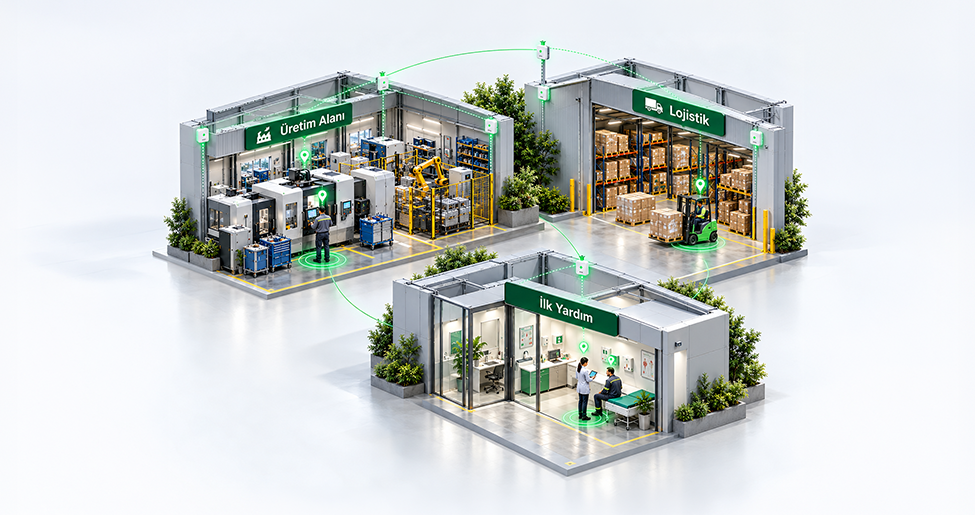
RTLS (Real-Time Location System) is the general name of the systems that determine the location of assets, equipment, or personnel. In these systems, a tag is attached to the tracked object. Receivers within the facility detect the wireless signals from this tag, calculate the location, and the information becomes visible instantly in a software platform. RTLS is used especially in closed areas such as warehouses, production facilities, and hospitals where GPS signal is weak.
Depending on the use scenario in RTLS systems, different technologies such as BLE, UWB, Wi-Fi, or RFID can be used. The location data can be temperature, humidity, and movement. IoT When combined with sensor data, businesses can monitor not only where an asset is located, but also under what conditions it is present. In this regard, RTLS is one of the important components of the IoT infrastructure that transforms physical operations into digital data.
So, how does RTLS work, what technologies does it use, and what benefits can it provide to businesses?
What is RTLS?
RTLS is the general name for the technology and systems used to determine and track the location of physical assets, equipment, or personnel in real time or near real time. RTLS solutions, especially used in manufacturing facilities, warehouses, hospitals, and large operational areas, make physical assets visible in the digital environment.
For example, in a manufacturing facility, it is not necessary to physically search to find out where a piece of equipment is located. The current location of the equipment can be viewed through the RTLS platform.
Therefore, RTLS should not be viewed solely as a location tracking system. It can also be considered as one of the IoT technologies that helps businesses transform their physical operations into digital data.
How Does RTLS Work?
The basic working principle of RTLS can be summarized as follows:
Tracked asset → Tag/Sensor → Signal → Receivers → Localization → IoT Platform → Real-time Data
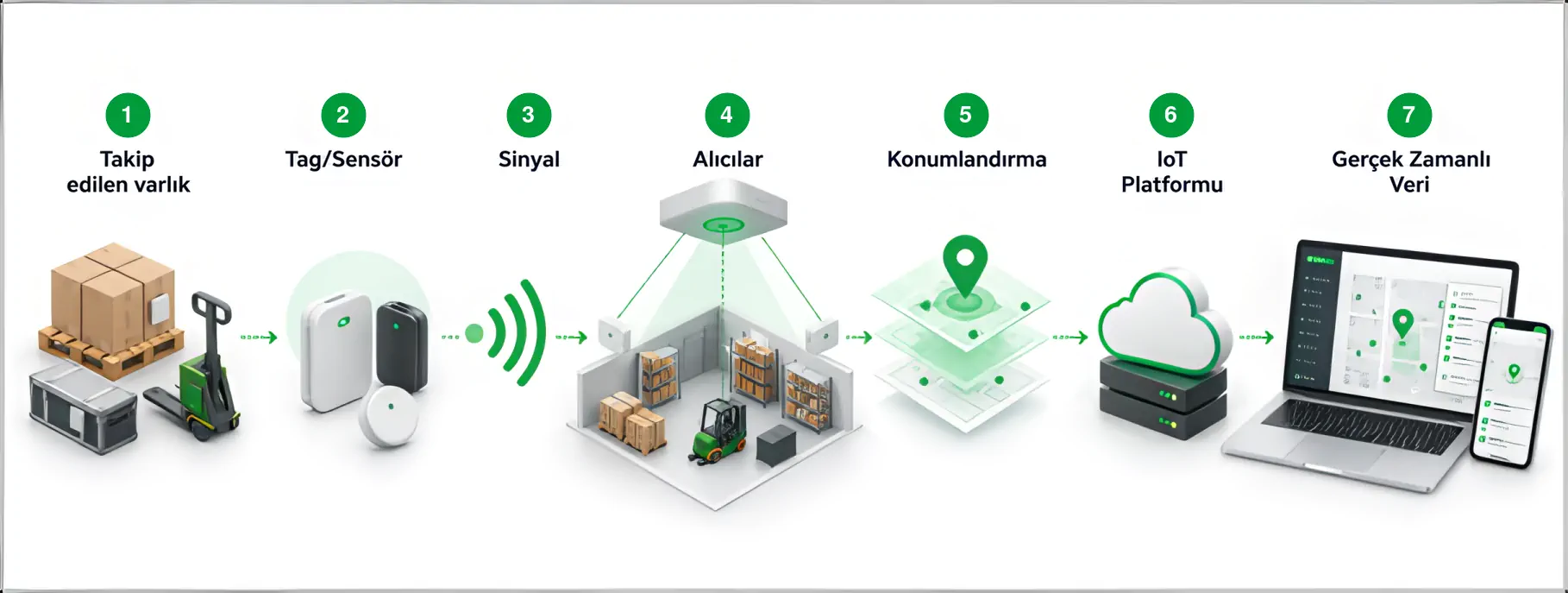
A RTLS system usually has the following components:
- Tag/Label: It attaches to the entity, equipment, or person that is wanted to be tracked.
- Sensors/Receivers: It detects the signals from the tag.
- Location infrastructure: It calculates the location information from the signals.
- Software platform: It presents the location data to the user on a map or diagram.
- IoT integration: It enables the evaluation of location information in conjunction with other sensor and operational data.
For example, when RTLS tags are placed on equipment in a warehouse, the system can track the equipment’s location within the facility. This means that no physical search is required to answer the question “Where is the equipment?” The answer becomes data that can be viewed on a digital platform.
How is Location Calculated in RTLS?
In RTLS systems, location is generally determined using two approaches. Which approach is chosen depends on how detailed a location information the business needs.
- Zone-based positioning: The location of the asset is determined in terms of the area, room, or section. The receivers are placed at points of passage such as doors, corridors, entrances and exits, or specific areas. It is suitable for scenarios where the question “Which section does the equipment belong to?” is sufficient.
- Coordinate-based positioning: Buyers are used as a reference point and the position on the asset’s sketch is calculated. It is preferred in scenarios where more detailed location information is required.
In general, the number and placement of receivers are important factors that affect positioning accuracy. Therefore, a layout plan suitable for the facility’s structure must be prepared before installation.
Which Technologies are Used in RTLS?
RTLS does not refer to a single technology. Different technologies can be used depending on the usage scenario, the facility’s structure, and the required positioning accuracy.
| Technology | Where is it used? | Featured feature | Role in RTLS |
| UWB | Production facilities, warehouses, hospitals | High position accuracy | Precise positioning |
| BLE | Varlık ve ekipman takibi | Düşük enerji tüketimi | İç mekân varlık takibi |
| Wi-Fi | İşletmeler ve tesisler | Mevcut ağ altyapısından yararlanabilme | İç mekân konumlandırma |
| RFID | Depo, üretim ve lojistik | Varlık tanımlama ve takip | Malzeme ve varlık takibi (pasif RFID’de konum, etiket okuyucu noktasından geçtiğinde güncellenir) |
Not: Konum hassasiyeti; kullanılan donanım, tesisin fiziksel yapısı, sensör yerleşimi ve sistem mimarisine göre değişebilir.
What is the difference between RTLS and GPS?
RTLS ve GPS, konum bilgisi sağlamak için kullanılan teknolojilerdir. Ancak çalışma prensipleri ve kullanım alanları birbirinden farklıdır.
GPS, konum belirlemek için uydu sinyallerinden yararlanır. RTLS ise konum bilgisini tag, sensör, alıcı ve yerel konumlandırma altyapıları üzerinden belirler.
RTLS özellikle kapalı alanlarda ve kontrollü operasyon ortamlarında anlık konum görünürlüğü sağlamak için kullanılabilir. Üretim tesisleri, depolar, hastaneler ve benzeri alanlarda varlıkların, ekipmanların ve personelin konumunun izlenmesini destekleyebilir.
| Feature | RTLS | GPS |
| Konumlandırma yöntemi | Tag, sensör ve alıcılar üzerinden | Uydu sinyalleri üzerinden |
| Kapsama | Tesis veya tanımlı alan | Küresel |
| Öne çıkan kullanım alanı | Kapalı alanlar ve tesis içi operasyonlar | Açık alanlar |
| Konumlandırma altyapısı | Yerel sensör ve alıcı altyapısı | Uydu sistemi |
| İç mekân kullanımı | Kullanılan teknoloji ve altyapıya bağlı olarak uygundur | Bina içerisinde sinyal koşullarından etkilenebilir |
| Tag / cihaz enerji tüketimi | Teknolojiye göre düşük olabilir | Görece daha yüksek olabilir |
What Can Be Tracked with RTLS?
RTLS yalnızca tek bir varlık türünün takibi için kullanılmaz. Kullanım senaryosuna bağlı olarak şunlar takip edilebilir:
- Üretim ekipmanları
- Paletler
- Konteynerler
- Mobil ekipmanlar
- El aletleri
- Tıbbi ekipmanlar
- Depo varlıkları
- Üretim hattındaki malzemeler
- Personel ve saha ekipleri
Buradaki temel değer yalnızca varlığın nerede olduğunu bilmek değildir. RTLS sayesinde varlığın konumu, hareketi ve belirli operasyonel durumlarla ilişkisi de değerlendirilebilir.
RTLS’in İşletmelere Sağladığı Faydalar Nelerdir?
RTLS’in işletmelere sağlayabileceği başlıca faydalar şunlardır:
- Anlık konum görünürlüğü: Varlıkların ve ekipmanların nerede olduğu anlık olarak görüntülenebilir.
- Operational efficiency Ekipman aramaktan ve gereksiz hareketlerden kaynaklanan zaman kayıpları azaltılabilir.
- Ekipman kullanımının izlenmesi: Ekipmanların hangi alanlarda bulunduğu ve nasıl hareket ettiği takip edilebilir.
- Çalışan güvenliğinin desteklenmesi: Çalışanların veya belirli ekiplerin konum bilgilerinden güvenlik senaryolarında yararlanılabilir. Örneğin yalnız çalışan personel için acil durum bildirimleri kurgulanabilir.
- Kayıp ekipmanların bulunması: Ekipmanın mevcut veya son bilinen konumu üzerinden arama süreçleri kolaylaştırılabilir.
- Data-based decision making: Konum verisi diğer IoT verileriyle birleştirilerek Data analytics süreçlerinde operasyon hakkında daha kapsamlı değerlendirme yapılabilir.
The Relationship between RTLS and IoT
RTLS’in IoT açısından önemli özelliklerinden biri, konum bilgisinin diğer sensör verileriyle birleştirilebilmesidir.
IoT sistemleri şu gibi farklı veriler toplayabilir:
- Sıcaklık
- Nem
- Movement
- Energy consumption
- Ekipman durumu
RTLS ise bu verilere konum boyutunu ekleyebilir.
Örneğin bir soğuk hava deposunda yalnızca “Sıcaklık 4°C” bilgisi görülebilir. RTLS ile buna şu sorunun yanıtı da eklenebilir: “4°C ölçen sensör hangi bölgede ve hangi varlık üzerinde?”
Bu yaklaşım, RTLS’i yalnızca bir konumlandırma teknolojisi olmaktan çıkarır ve IoT ekosisteminin önemli veri kaynaklarından biri haline getirir.
Where is RTLS used in the healthcare sector?
RTLS; fiziksel varlıkların, ekipmanların veya insanların bulunduğu birçok sektörde farklı kullanım senaryolarına uyarlanabilir.
| Sector | RTLS kullanım senaryosu | Takip edilebilecek varlıklar |
| Production | Üretim alanındaki ekipman ve malzemelerin konumlandırılması | Ekipman, malzeme |
| Lojistik & Depolama | Depo içerisindeki varlıkların izlenmesi | Palet, konteyner, ekipman |
| Sağlık | Tıbbi ekipmanların konumunun izlenmesi | Tıbbi cihazlar |
| Endüstriyel Tesisler | Ekipman ve personel konum görünürlüğünün sağlanması | Ekipman, personel |
| Energy | Tesis içerisindeki kritik varlıkların izlenmesi | Ekipman |
| Perakende | Mağaza ve depo içerisindeki varlıkların izlenmesi | Stok, ekipman |
| Akıllı Binalar | Bina içerisindeki mobil varlıkların izlenmesi | Ekipman, mobil varlık |
What Should Be Considered When Choosing the Right RTLS Solution?
Bir RTLS çözümü seçilirken öncelikle işletmenin hangi problemi çözmek istediği belirlenmelidir. Dikkate alınabilecek başlıca kriterler şunlardır:
- Konum hassasiyeti (bölge bazlı mı, koordinat bazlı mı?)
- Tesisin fiziksel yapısı
- Takip edilecek varlıkların türü
- Kullanılacak teknoloji
- Mevcut altyapı ve Wi-Fi ağından yararlanılıp yararlanılamayacağı
- Kurulum altyapısı (alıcı/gateway sayısı ve yerleşimi)
- Tag pil ömrü
- IoT entegrasyonları
- Ölçeklenebilirlik
- Personel konum verilerinin kişisel verilerin korunması (KVKK) kapsamında değerlendirilmesi
Bu nedenle doğru RTLS çözümünü belirlerken yalnızca “Hangi teknoloji?” sorusu yeterli değildir. “Hangi operasyonel problemi çözmek istiyoruz?” sorusuna da cevap verilmelidir.
Indoor Location and Sensor Tracking with MobiSense IoT Solutions
MobiSense IoT Çözümleri, tesis içindeki ekipman, personel ve sensör verilerini tek bir platformda bir araya getirir. BLE 5.0 destekli sensörler, üretim alanlarında ve depolarda kablo altyapısı gerektirmeden veri iletebilir. Wi-Fi tabanlı gateway cihazları bu veriyi platforma aktarır. Wi-Fi bulunmayan alanlarda ise GSM tabanlı cihazlarla iletişim sürdürülebilir.
Web tabanlı panel üzerinden:
- Sensörler harita veya kroki bazlı izlenebilir. Konumları ve en güncel verileri tek ekranda görüntülenebilir.
- Personel ve ekipman takibi, forklift ve transpalet hareket takibi ve depo içi varlık yönetimi gibi senaryolar kurgulanabilir.
- Acil durum sistemleriyle yalnız çalışan personelin güvenliği desteklenebilir.
- Anlık alarmlar ve otomatik kurallar tanımlanabilir, raporlar zamanlanabilir.
- Farklı marka sensörlerden gelen veriler BLE, Wi-Fi, GSM, MQTT, REST ve LoRaWAN gibi protokollerle aynı platforma entegre edilebilir.