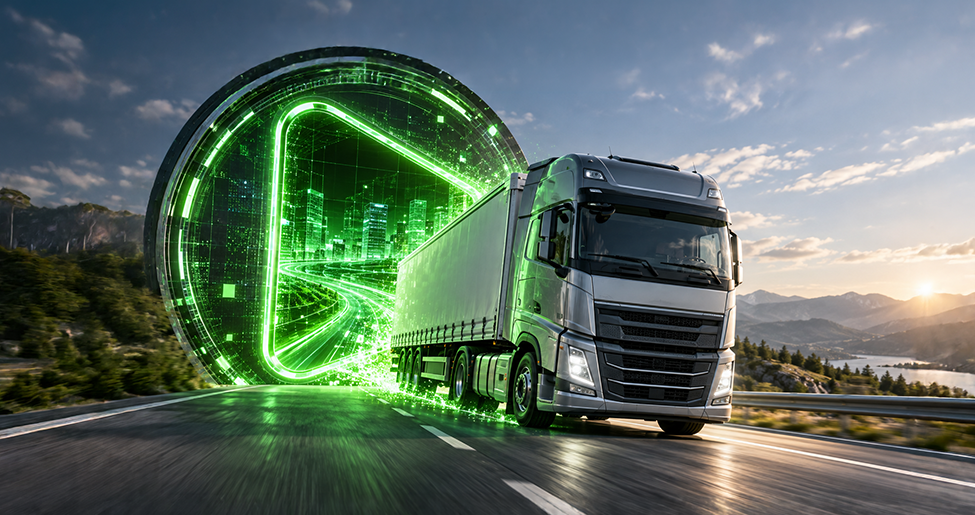
Video telematics, It is a technology that combines GPS and driving data from vehicles with camera images to enable more comprehensive monitoring of fleet operations. With AI-powered analysis, risky situations that occur during driving can be detected, driver behaviors can be analyzed, and video recordings of accident moments can be created.
What is Video Telematics?
Video telematics is a fleet management technology that works by combining data from vehicle tracking and telematics systems with camera footage. By evaluating GPS location, speed, driving behavior, and vehicle data along with camera recordings, it enables a more detailed examination of incidents.
In classic vehicle tracking systems, managers can see where the vehicle is, at what speed it is moving, or when a specific driving incident occurred. Video telematics, in addition to these data, provides the image of the incident, allowing for a more comprehensive assessment.
Video telematics is also different from a standalone vehicle camera. A vehicle camera (dashcam) basically records images. The video telematics system, however, pairs these images with location, speed, and driving data, automatically flagging events and transferring them to the fleet management platform.
To obtain information about the general working structure of telematics technology What is Telematics? You can review its content.
What Components Comprises the Video Telematics System?
A video telematics system consists of the components that collect and process data with the camera hardware working together. The components used may vary from solution to solution.
Types of cameras
| Camera type | What does it record? | What does it provide? |
| Camera facing the road | The road and traffic in front of the vehicle | Viewing events from the perspective of the driver |
| Two-way camera (road + driver) | Both road and in-vehicle | Evaluating events in conjunction with the driver's behavior |
| Camera with artificial intelligence support | Road and vehicle-internal analysis continuously | Automatic detection and instant warning of risky behaviors |
Other components
- GPS and accelerometer: The location, speed, sudden braking, and motion data such as shaking are matched with the events.
- DMS (Driver Monitoring System): It analyzes the driver's attention status through the in-vehicle camera.
- ADAS (Advanced Driving Support Systems): In situations such as following distance, lane violation, and collision risk, it generates warnings.
- Connection module: It transmits the image clips and data wirelessly to the central platform.
- Central platforms and applications: It enables the investigation, reporting, and management of driver feedback on events via the web and mobile.
How Does Video Telematics Work?
The cameras installed on the vehicle in the video telematics system work in conjunction with data from GPS and telematics devices. The system collects vehicle location, speed, and driving data while the vehicle is in motion, and also records camera images.
The working process generally proceeds as follows:
- GPS, speed and driving data are collected from the vehicle.
- The camera system records road and vehicle interior images.
- Accidental braking, sudden acceleration, collisions, or similar events are detected.
- The system stores the footage of the event in a clip for the next few seconds before and after the incident.
- The images associated with the incident and the vehicle data are matched.
- The data is transferred to the central platform and made available to the fleet manager.
- Depending on the characteristics of the system, the driver can be given a voice warning inside the vehicle.
Which events are recorded is usually determined by threshold values. For example, settings such as recording a speeding ticket only above a certain rate of overspeeding can be configured according to the fleet’s risk priorities. Since analysis can be performed on the camera with artificial intelligence support, warnings can be generated more quickly.
Thanks to this structure, fleet managers can not only see when and where an incident occurred, but also examine what happened during the incident.
Video What data is collected with telematics?
Video telematics systems can evaluate different types of data related to the vehicle and driver together. Although the data that can be collected varies depending on the characteristics of the device and solution used, it can include the following:
| Data type | Contribution to fleet management |
| GPS and location | Location and route tracking of vehicles |
| Speed | Monitoring of speeding violations and driving performance |
| Driving data | Analysis of behaviors such as hard braking and sudden acceleration |
| Camera footage | Visual examination of the events |
| DMS data | Monitoring driver behavior such as phone use, fatigue indicators, seat belt usage |
| ADAS warnings | Follow-up distance allows for early detection of risks such as lane violations |
| Vehicle data (CANBus) | Monitoring technical data such as fuel consumption, engine status, and fault codes |
When these data are evaluated together, they also create a more detailed picture in terms of driver behavior analysis. For example, a sudden braking that appears to be a driver error in the sensor data may have been caused by hitting the front of another vehicle when the camera image is examined.
What are the differences between Video Telematics, Vehicle Camera, and Classic Vehicle Tracking System?
| Feature | Classic Vehicle Tracking System | Single Vehicle Camera | Video Telematics |
| Location, speed and route tracking | ✓ | — | ✓ |
| Driving behavior analysis (brake, acceleration) | Limited | — | ✓ |
| Video recording and examination of the incident | — | ✓ | ✓ |
| Matching the image with vehicle data | — | — | ✓ |
| Cabin in-flight behavior (phone use, fatigue, seatbelt use) | — | Limited | ✓ |
| Object detection supported by artificial intelligence | — | Limited | ✓ |
| ADAS warnings | — | Limited | ✓ |
| Instant voice alert to the driver | — | Limited | ✓ |
| Remote access from a central platform | ✓ | — | ✓ |
Classic vehicle tracking systems Basically, it tracks information such as the vehicle's location, speed, and route. Vehicle cameras operate independently, recording images, but these images are often not associated with vehicle data. Video telematics combines the two structures to allow both the data and the image to be evaluated based on the same event.
Therefore, the fundamental difference between these systems is the integration of data with images. Video telematics, by enriching the information provided by vehicle tracking systems with camera recordings, creates a more comprehensive monitoring structure for fleet safety.
How Does Incident Detection and Alerting with Artificial Intelligence Work?
Artificial intelligence-powered video telematics systems can automatically detect specific driving events or risks by analyzing camera images. This allows the fleet manager to highlight events that need attention without having to manually review thousands of hours of footage.
The situations that can be identified vary depending on the system's characteristics, and can be addressed in two groups:
- Side view (ADAS): Collision risks such as reduced following distance, lane violation, and rapidly approaching the vehicle in front.
- Driver side (DMS): Distractions while driving, fatigue symptoms, failure to wear seat belts, smoking, and other safety violations.
When these situations are detected, the system can inform the driver of the issue via an audible warning within the vehicle, depending on the solution used, and record the incident for the fleet manager to review. This way, the risky behavior can be addressed both immediately and through subsequent evaluation.
Evaluating events determined by artificial intelligence in conjunction with telematics data contributes to easier detection of risky driving behaviors and the development of feedback processes for drivers.
What are the benefits of video telematics systems for vehicle fleets?
Video telematics provides managers with the ability to assess incidents in more detail in terms of fleet safety. Analyzing image and telematics data together helps identify driving-related risks and improve safe driving processes.
From a fleet management perspective
- The ability to examine accident and risky driving incidents in video form
- More comprehensive analysis of driver behavior
- Facilitation of investigation processes after the accident
- Central management of fleet security processes
- Visual support for operational data
For drivers
- The use of video recording in matters for which the driver is not responsible protects the driver against unfair accusations
- That driver training can be conducted based on concrete case records rather than general rules
- Making safe driving visible and allowing it to be used as an objective measure in appreciation or reward processes
Positioning the camera not only as a means of control but also as a system that protects the driver makes it easier for drivers to adopt the system.
What is the impact on fleet security and insurance costs?
Video telematics helps in more detailed examination of events in fleet safety processes. Evaluating camera footage along with vehicle data in the case of accidents or risky driving situations can create a clearer record of how the incident occurred.
These recordings can be used in accident investigations, driver training, and liability assessments. Documenting the incident visually in insurance processes can also support damage assessment.
On the cost side, it is not correct to speak of a single savings rate for video telematics. The size of the fleet, vehicle type, driving habits, accident history, and the current operational structure all have an impact. Therefore, the impact of the investment must be monitored through indicators specific to the fleet:
| Indicator | What does it measure? |
| Number of risky driving incidents (per 100 km) | Change in driver behavior |
| Frequency of accidents and damage | Security performance |
| Cost per damage file | Cost impact after the accident |
| Duration of damage and objection processes | The contribution of video recording to processes |
| Change in driver scores | The impact of education and feedback |
Comparing these indicators before and after system installation helps measure the contribution video telematics provides to the fleet.
Which are the sectors that benefit the most from video telematics?
Video telematics can be used in different sectors where vehicle safety and driver behavior need to be closely monitored.
| Sector | Prominent risk | The role of video telematics |
| Transportation and logistics | Long driving, fatigue | Detection of fatigue and distraction |
| Distribution and shipping | Intense city traffic, frequent stops | Recording the moments of accident and damage |
| Passenger transportation | Passenger safety | Monitoring driving behavior and events |
| Petroleum products transportation | Dangerous cargo | Early detection of risky driving |
| Energy | Field and challenging road conditions | Incident record in field operations |
| Service and field operations | High frequency of vehicle use | Central monitoring of driver behavior |
| Car rental | Vehicle damage and liability | Documentation of the moment of damage |
| Healthcare services | Emergency and time-critical driving | Monitoring driving safety |
| Cold chain logistics | Time and delivery reliability | Recording the driving and delivery process |
Since it is difficult to manually track incidents in fleets with a large number of vehicles, analyzing images along with vehicle data helps to carry out fleet security processes more systematically.
What Should Be Considered When Choosing a Video Telematics Solution? (added)
The right solution should be determined based on the risks of the fleet and its operational structure. When evaluating, the following topics can be considered:
- Goals: Clarifying priorities such as accident reduction, driver training, and damage processes
- Camera structure: Is road view only required, or does the road and the vehicle need to be together?
- The incidents identified: Which ADAS and DMS events the system can detect
- Threshold settings: The trigger thresholds can be customized according to the unit
- Storage and access: Where the images are stored, how long they are kept and who has access to them
- Integration: It can work with the existing vehicle tracking and fleet management system
- KYKY compliance: Supporting the processes related to the processing of personal data
- Installation and support: Installation, training, and post-installation technical support processes
How to Protect Your Fleet with Mobiliz Video Telematics Solutions
Mobile video telematics solutions combine the location and driving data from vehicles with camera images to provide fleet managers with more comprehensive tracking capabilities.
In-Vehicle Mobile Camera: In-vehicle and road images can be recorded. The images taken from the vehicle can be evaluated along with the data obtained from the vehicle at the time of the incident.
CANBus integration: In operations where more comprehensive technical data is required than from vehicles CANBus With integration, fuel, engine and fault data can be evaluated along with camera images.
Behavior analysis with the driver meter: Camera recordings DriverMeter When used together, driver behaviors can be scored and training processes can be based on concrete events.
Fleet management platform: Images and data can be monitored centrally via the fleet management system.
Mobile video telematics solutions help to manage fleet safety in a more holistic way by combining camera images with vehicle tracking and fleet management infrastructure.
You can contact the Mobiliz team to determine the video telematics structure that suits your fleet, and you can request a demo to closely examine the solutions.