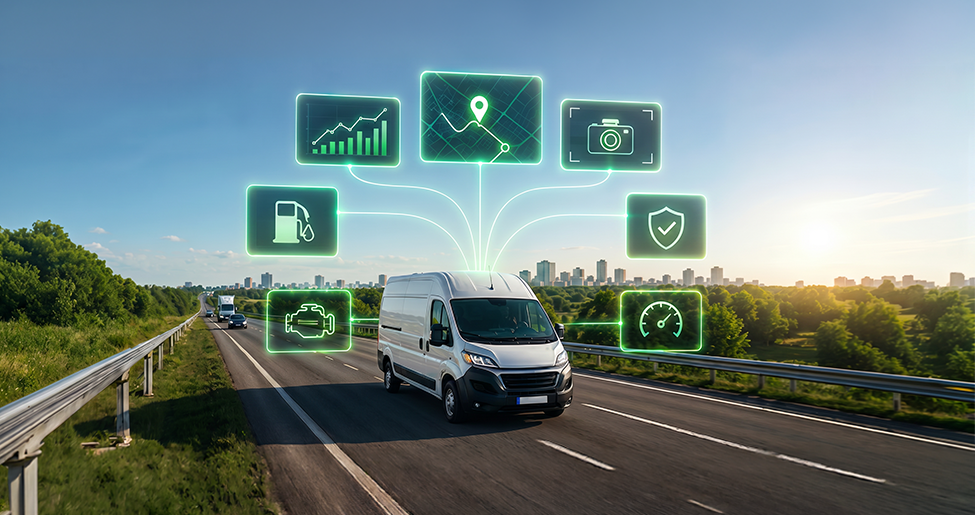
Telematics is the general term for systems that collect data such as a vehicle's location, speed, fuel consumption, and driver behavior through GPS, in-vehicle sensors, and wireless communication technologies, and transmit it to a central software platform.
For fleet managers, this technology means much more than just seeing where vehicles are. Information such as which vehicle is consuming more fuel, which driver is exhibiting risky driving habits, or which vehicle is nearing maintenance needs can be tracked through a single platform. This allows for more controlled management of daily operations, while decisions are based on data from the field. In this guide, we will discuss how telematics systems work, what data they collect, and their contributions to fleet management.
What is Telematics?
“The word ”telematics“ is derived from the combination of the words ”telecommunication“ and ”informatics," and essentially means the remote collection and transmission of information. In the automotive context, this concept refers to a device installed in a vehicle sending data collected from the engine computer, GPS module, and internal sensors to the cloud via a cellular network.
While telematics is often confused with vehicle tracking systems, its scope is much broader. Vehicle tracking systems primarily focus on location and route information, whereas telematics solutions evaluate different layers of data coming from the vehicle together. Information such as fuel consumption, driving habits, maintenance needs, and operational performance can be analyzed within the same framework. Consolidating data from vehicles in a single point helps managers see operations more clearly and base their decisions on more robust data.
How Does Telematics Work? The Role of GPS, OBD, and GSM
The operation of a telematics system can be summarized in four basic steps:
- Data collection: The device connects to the vehicle's OBD-II port or the CAN Bus line in heavy-duty vehicles to read engine, fuel, and fault data.
- Location The integrated GPS module calculates the vehicle's current location, speed, and route using signals received from satellites.
- Transmission The GSM/cellular modem transmits collected data to the cloud server via the mobile network.
- Processing and reporting The cloud-based software platform transforms raw data into actionable reports, map views, and alerts.
Data transmission typically occurs every few seconds, allowing the fleet manager to track vehicles with near real-time latency.
What are the basic components of a telematics system?
A telematics solution consists of hardware and software components that work together in coordination:
| Component | Task |
| Telematics Control Unit (TCU) | Manages all components, coordinates the data processing process |
| GPS Module | Determines the vehicle's location, speed, and route information. |
| OBD-II / CAN Bus Interface | Reads engine, fuel consumption, and error codes from the car's computer |
| GSM / Cellular Modem | Transmits collected data to the cloud via the mobile network |
| Internal Sensors (accelerometer, etc.) | Detects driving events such as braking, acceleration, and impact |
| Cloud Software Platform | Processes data, prepares reports, and presents them to the fleet manager. |
The Telematics Control Unit (TCU) ensures system coordination and manages the transmission process by bringing together data from different components.
What data is collected with telematics?
Telematics systems are not limited to a single data type; they monitor different layers of fleet operations simultaneously:
- Location, speed, and route information
- Fuel consumption and fuel level
- Engine fault codes (DTC) and maintenance warnings
- Driving behavior: sudden braking, acceleration, hard cornering
- Engine operating time and idle time
- Mileage and service interval tracking
- Temperature data (critical, especially in cold chain logistics)
- Driver identification (with RFID card or iButton)
The collected data, when evaluated on its own, has limited meaning. Its true value emerges when this information is brought together and interpreted. For example, when high fuel consumption, long idling times, and specific driving habits are examined together, the cost-increasing factors can be seen more clearly. Thus, managers can not only track what is happening but also more easily identify opportunities for improvement.
What is Video Telematics? What does Camera Integration provide?
Video telematics is a structure formed by adding camera footage to operational data obtained from vehicles. This integration provides the following advantages for fleet management:
- Visual record of the accident. It serves as evidence in insurance and legal proceedings.
- Driver coaching This creates opportunities for targeted training by detecting behaviors such as fatigue or distraction (along with DMS technology).
- Event-based logging Images are stored synchronized with trigger events such as sudden braking or impact, which efficiently utilizes storage space.
- Protection against baseless claims Video evidence protects fleets against unfair liability claims.
Standard telematics systems can show when and where an incident occurred. Video telematics, however, offers the ability to see the context behind the incident. Combining numerical data with video recordings helps to make clearer and more reliable assessments in many processes, from accident investigations to driver training.
What does telematics bring to fleet management?
As the number of vehicles increases, managing operations with information from the field becomes more difficult. Telematics systems help managers make faster and more accurate decisions by making the mobility experienced in daily operations visible. When data related to vehicle usage, driving performance, and operational processes are gathered on a single platform, it becomes possible to use resources more efficiently.
- Cost control Fuel consumption and unnecessary idling times become visible, and maintenance costs become predictable.
- Security increase Risky driving behaviors are detected early, providing concrete data for driver coaching.
- Operational efficiency Route optimization and increased vehicle utilization rates reduce planning errors.
- Regulatory compliance: Compliance with legal requirements such as digital tachographs and working time tracking becomes easier.
- Customer experience Real-time ETA notifications and delivery transparency are provided.
What is Insurance Telematics? How does Usage-Based Insurance (UBI) Work?
Insurance telematics, commonly known as Usage-based insurance (UBI) is a model where insurance companies calculate premiums using real driving data from drivers. There are two primary approaches: PAYD (Pay As You Drive), which prices based on mileage, and PHYD (Pay How You Drive), which is based on driving style, such as braking habits and speed profile.
The practical implication of this model for policyholders is that a low-risk profile, supported by telematics data, can help present driving performance with concrete data in assessments conducted with insurance companies.
How to analyze telematics data with artificial intelligence
When a fleet has tens or even hundreds of vehicles, thousands of data records are generated daily. Evaluating such a large volume of data manually is time-consuming and can lead to important details being overlooked. AI-powered analysis systems examine relationships within the data, highlighting points that require attention and helping managers take faster action.
- Predictive maintenance Detecting anomalies in motor data before failure occurs
- Risk scoring Scoring driver behavior data to identify the riskiest drivers
- Route and fuel optimization: Recommending the most efficient routes by analyzing past route data
- Anomaly detection Automatic flagging of unusual dwell times or off-route movements
Thanks to AI-powered analytics, fleet managers can not only evaluate past performance but also identify trends that could cause problems in the future before they emerge.
Mobiliz Telematics Solutions: Complete Fleet Management on a Single Platform
One of the most common challenges in fleet operations is that data from different sources is kept in separate systems. When location information is on one platform, driving data on another screen, and camera recordings in a different system, it becomes difficult to manage operations holistically.
Mobiliz integrates GPS-based vehicle tracking, OBD/CANBus integrations, video telematics solutions, and data analytics capabilities into a fleet management platform. This allows fleet managers to monitor numerous data points, from vehicle location and fuel consumption to driving behavior and maintenance processes, all from a single screen.
Viewing data from different use cases such as field teams, distribution operations, and logistics fleets on a single platform allows for easier tracking of operations.
Conclusion
Making data-driven decisions in fleet management ensures operations are conducted in a more controlled and predictable manner. Telematics technologies go beyond vehicle location information, offering a more comprehensive view of driving habits, fuel consumption, maintenance processes, and safety performance. With a telematics infrastructure that suits your fleet's needs, you can monitor your operations more closely, make resource utilization more efficient, and base your decision-making processes on real data.